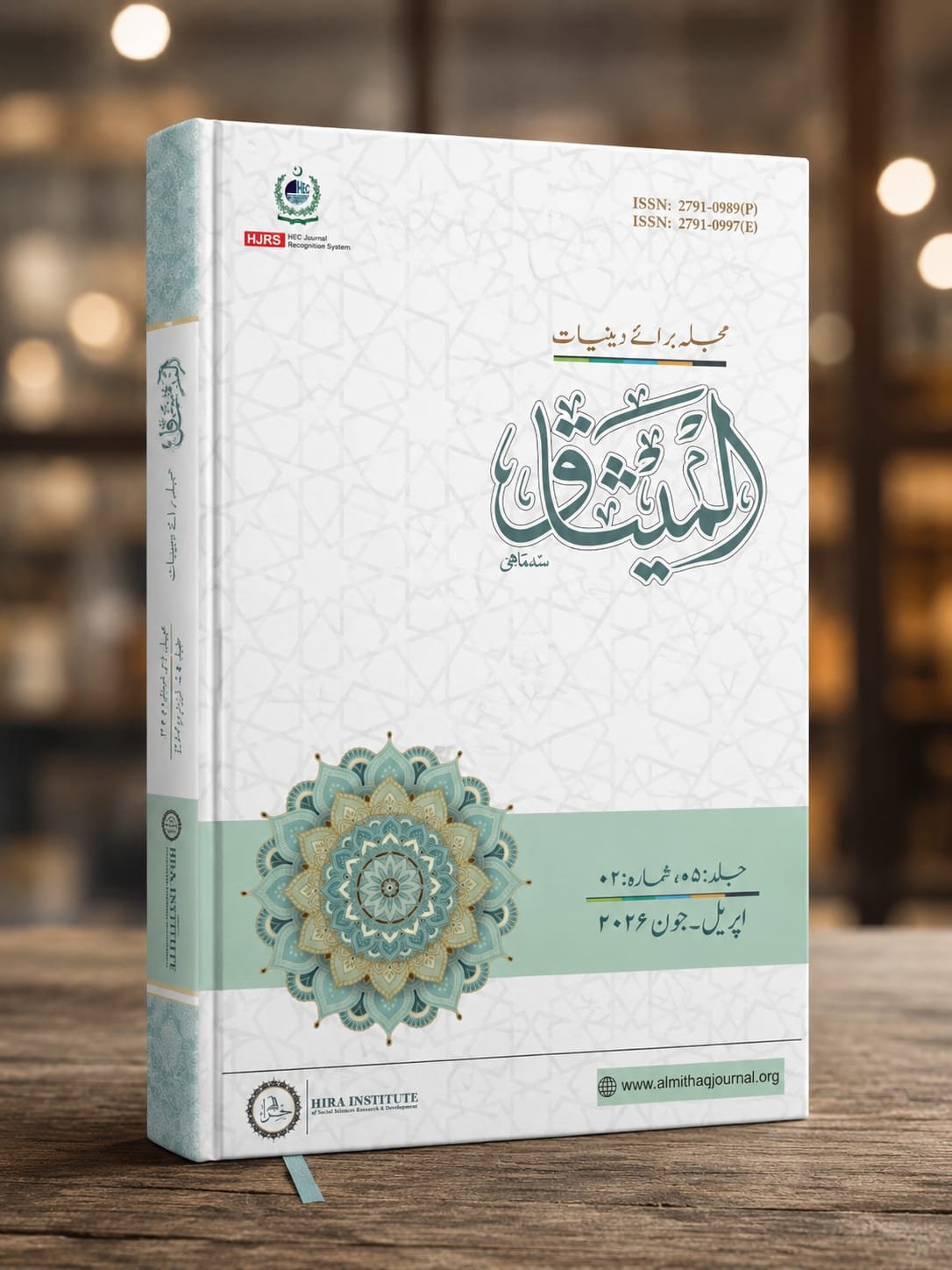
Balancing Individual Liberty and Social Responsibilities in the Light of Islamic Teachings: An Analytical Study
اسلامی تعلیمات کی روشنی میں شخصی آزادی اور معاشرتی ذمہ داریوں میں توازن: ایک تجزیاتی مطالعہ
Keywords:
Individual Liberty, Social Responsibility, Islamic Jurisprudence, Maqāṣid al-Sharī‘ah, Balance, Human DignityAbstract
Islamic jurisprudence establishes a comprehensive normative framework that harmonizes individual liberties with collective societal obligations. In contemporary discourse, the concept of freedom often oscillates between absolute individualism and authoritarian collectivism. This study examines the Islamic paradigm of personal freedom and social responsibility, demonstrating how Islamic teachings synthesize individual rights such as the right to life, freedom of belief, economic enterprise, and expression with moral and legal boundaries aimed at preserving social order (Maqāṣid al-Sharī‘ah). Utilizing a descriptive and comparative analytical methodology, this paper investigates foundational primary sources (the Qur’ān and Sunnah) alongside classical exegetical and legal interpretations to delineate the limits of personal autonomy. The findings reveal that freedom in Islam is intrinsically tied to moral accountability (Amānah) and social justice (‘Adl), encapsulated in the legal maxim Lā Ḍarar wa-lā Ḍirār (harm neither oneself nor others). The paper concludes that this balanced framework offers a viable ethical alternative to modern socio-political dilemmas, fostering a harmonious society grounded in justice, mutual obligation and human dignity.